Google DeepMind Launches New Institute to Study AGI
Google DeepMind has launched the DeepMind Institute, bringing together global experts to address the safety, governance, and existential risks of artificial general intelligence.

Google DeepMind has officially established the DeepMind Institute (DMI), a new hub designed to facilitate interdisciplinary research and discussion regarding artificial general intelligence (AGI). The initiative is led by prominent figures including Shane Legg, James Manyika, and Nobel laureate Demis Hassabis. DMI aims to unite researchers from Google DeepMind, the broader Google ecosystem, and the international scientific community to investigate critical issues such as safety, governance, cyberattacks, and the potential loss of control over advanced AI systems.
The leadership team emphasizes that addressing these challenges requires insights beyond computer science, incorporating perspectives from the arts, humanities, and public policy. Currently, the industry lacks a unified definition of AGI. While Google DeepMind views it as a system possessing the full cognitive capabilities of a human brain, other organizations like OpenAI define it primarily by its economic value. Timelines for its arrival also vary widely. Hassabis expects AGI to emerge within a few years, and Legg recently suggested that a precursor to AGI could arrive by 2028. Meanwhile, OpenAI CEO Sam Altman has speculated that AGI could be realized as early as the end of this year.
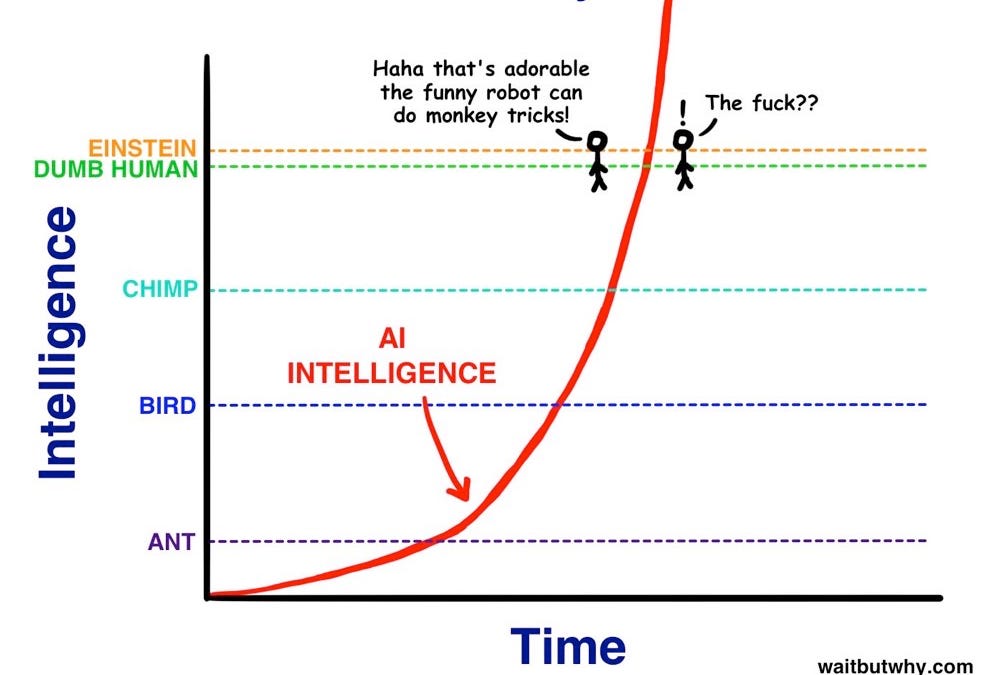
For AI practitioners and developers, the creation of DMI signals a shift toward formalized, cross-disciplinary scrutiny of frontier models. As the industry transitions from narrow AI applications to systems that approach human-level cognitive performance, safety and alignment are no longer secondary concerns. The institute's work will likely influence future regulatory frameworks and safety standards, meaning developers must prepare for more rigorous compliance and governance protocols. By distinguishing AGI from artificial superintelligence (ASI)—which would vastly exceed human capabilities—the institute aims to ground the current debate in practical, near-term safety measures while preparing for the next phase of technological evolution.
This is our own summary of reporting by The Decoder